Agent memory is three different things
When people say 'give the agent memory,' they usually mean three different things.
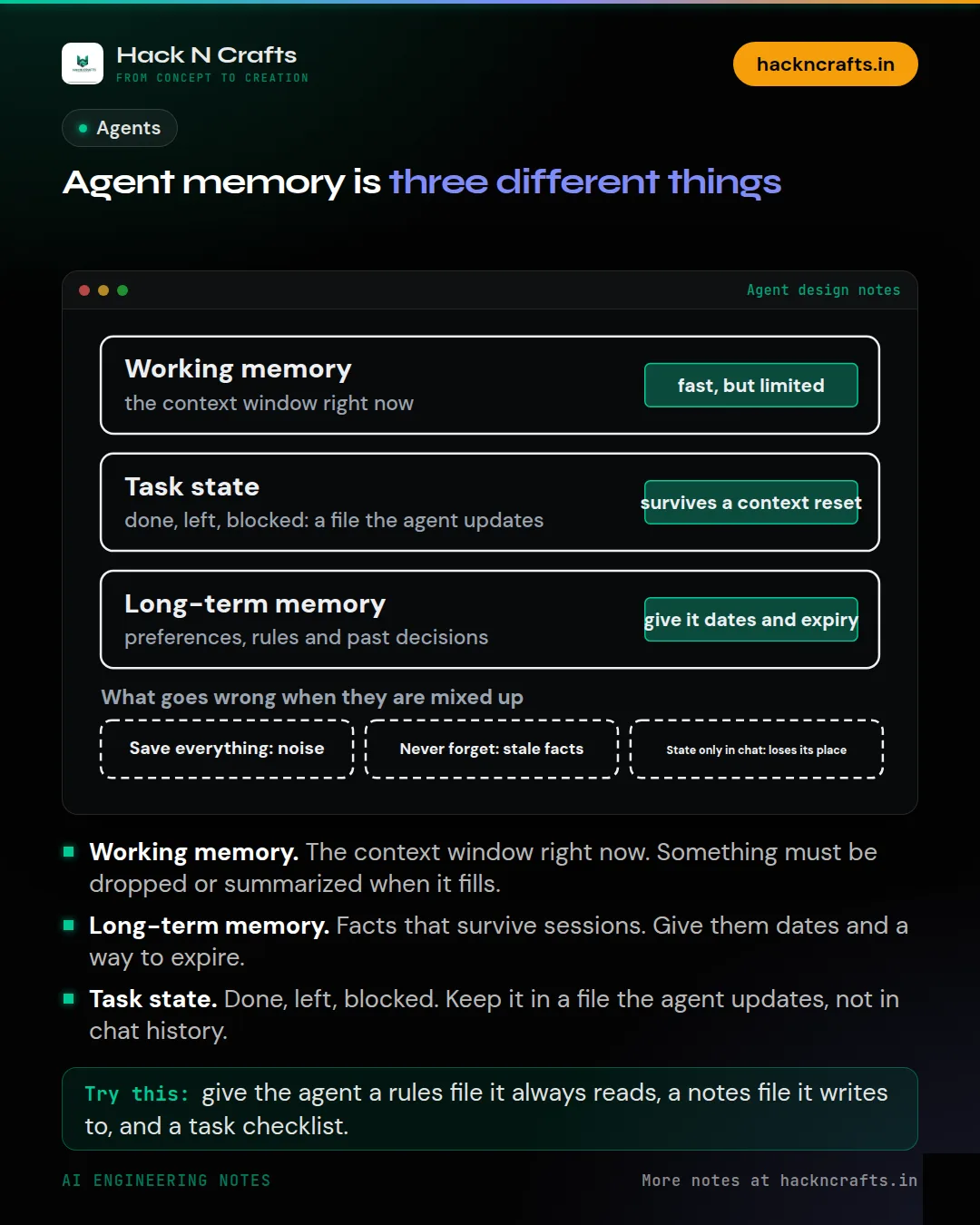
Working memory is what's in the context window right now: the task, recent steps, tool results. It's fast and limited, and when it fills up you have to drop or summarize something. Long-term memory is facts that should survive between sessions, like user preferences, project rules and past decisions, stored outside the model and loaded when relevant. Task state is where this specific job stands: what's done, what's left, what's blocked. It's often best kept in a structured file the agent updates, not in chat history.
Mixing them up causes predictable problems. If you save everything, memory fills with noise and retrieval gets worse. If you never forget, old facts that are now wrong keep getting used, so give memories dates and a way to expire. If state lives only in chat, the agent loses its place whenever the context resets.
A setup that works for me: a short rules file the agent always reads, a notes file it writes to when it learns something durable, and a task checklist it updates as it goes. Plain files beat a fancy memory system you can't inspect.
What does your agent remember between sessions, and who decides what gets saved?
New notes go out on LinkedIn first. Building something with AI? We can help.